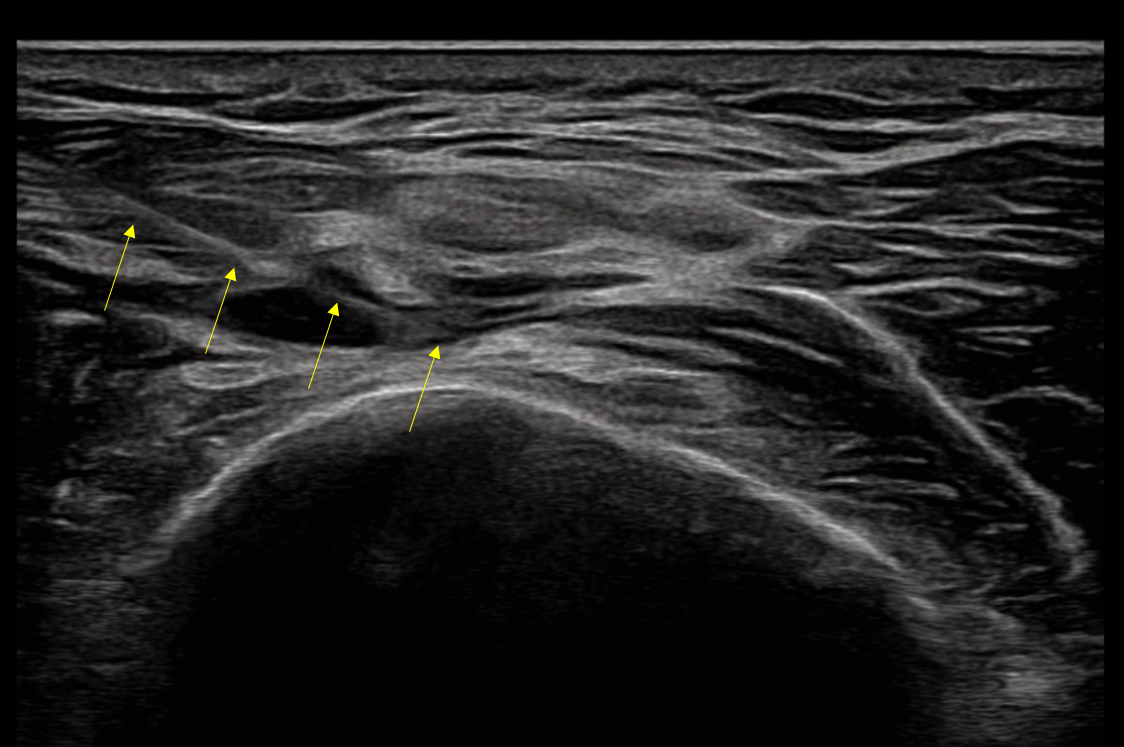
Lecture Overview – This lecture is structured around the following key learning objectives:
1. Enhance medical knowledge by understanding the basic sonoanatomy of the major nerves in lower extremities.
2. Improve clinical competency by adapting new practical skills in pain management interventions for the lower extremities.
3. Enhance patient outcomes by adapting more precise and safe pharmacopuncture injection techniques for patients with knee osteoarthritis and peripheral neuropathy of the lower extremities.
This lecture moves beyond a general introduction to ultrasound-guided interventions to demonstrate how ultrasound-guided pharmacopuncture for major peripheral nerves of the lower limb can be systematically understood and applied in contemporary clinical practice. Beginning with a clear anatomical and procedural framework, learners are guided step by step through the essential sonoanatomy of lower-extremity peripheral nerves, practical ultrasound scanning strategies, and safe pharmacopuncture injection techniques.
Rather than focusing only on anatomical description, the session emphasizes procedure-oriented clinical reasoning—how to interpret ultrasound anatomy in real time, determine appropriate needle approaches, and translate anatomical knowledge into precise and safe pharmacopuncture interventions in daily clinical practice.
Key highlights include:
Understanding Lower Limb Peripheral Nerve Sonoanatomy
The lecture begins with a structured overview of the major peripheral nerves of the lower extremity and their ultrasound appearance. Emphasis is placed on identifying key anatomical landmarks and recognizing spatial relationships between nerves, surrounding muscles, fascia, and vascular structures. This foundation supports accurate nerve identification and safe procedural planning.
Systematic Ultrasound Scanning Techniques
Learners are introduced to systematic scanning methods used to locate and track major peripheral nerves in the lower limb. The session highlights probe positioning, longitudinal and transverse scanning approaches, and practical techniques for optimizing image quality and anatomical orientation.
Needle Guidance Techniques: In-Plane and Out-of-Plane Approaches
The lecture compares in-plane and out-of-plane needle approaches used during ultrasound-guided pharmacopuncture. Emphasis is placed on needle trajectory planning, maintaining real-time needle visualization, and selecting the appropriate approach depending on anatomical conditions.
Step-by-Step Pharmacopuncture Protocols
In a dedicated section, the lecture presents step-by-step clinical protocols for ultrasound-guided pharmacopuncture targeting major lower-extremity peripheral nerves. Learners are guided through entry-point planning, procedural sequencing, and stable needle positioning during injection.
Basic Procedural Care and Post-Procedure ConsiderationsThe lecture briefly addresses basic procedural care, including appropriate sterilization and careful handling of the injection site during pharmacopuncture procedures. Simple post-procedure management is also discussed, such as gentle tissue massage after injection—particularly for procedures involving the sural nerve, where temporary swelling may occur. These practical considerations help maintain patient comfort and support safe clinical practice.
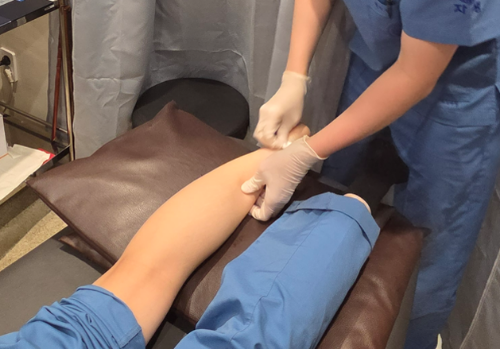
As ultrasound-guided interventions become increasingly integrated into clinical practice, clinicians face growing responsibility to perform these procedures with anatomical precision and procedural safety. This lecture responds to that need by bridging the gap between theoretical anatomical knowledge and practical ultrasound-guided pharmacopuncture techniques for the lower extremities.
By focusing on systematic nerve identification, structured scanning methods, and practical needle guidance strategies, the session supports more consistent, confident, and precise application of ultrasound-guided pharmacopuncture in clinical settings.
Join this CME session to deepen your understanding of lower-extremity peripheral nerve sonoanatomy, refine ultrasound scanning techniques, and learn practical protocols for safe and precise pharmacopuncture procedures.
Whether you are a resident clinician developing foundational ultrasound skills or an experienced practitioner seeking to improve procedural accuracy, this lecture provides clear, clinically relevant guidance to support safer and more effective ultrasound-guided interventions in everyday practice.