Lecture Overview – This lecture is structured around the following key learning objectives:
1. Enhance core competency by deepening medical knowledge of local anesthetics, including their mechanisms of action, pharmacokinetics, and systemic toxicity.
2. Improve clinical performance and safety in acupoint anesthesia by studying the fundamental principles and clinical applications of conventional anesthesia.
3. Foster advanced clinical practice by integrating medical knowledge across different specialties—Anesthesiology and Korean Medicine—through interdisciplinary learning.
This lecture provides a foundational introduction to local anesthetics and serves as the first installment in a broader series on their clinical use. Rather than attempting to cover all advanced applications at once, this session focuses on the essential principles that every clinician should understand before progressing to more advanced topics in later parts. Learners are guided step by step through the core scientific and clinical framework of local anesthetics, including their definition, historical development, classification systems, chemical structure, and the pharmacologic properties that determine clinical behavior. By establishing this strong foundation, the lecture aims to broaden the clinical knowledge spectrum of practitioners and support more comprehensive medical understanding.
Key highlights include:
Understanding the Foundations of Local AnestheticsThe lecture begins with a structured overview of what local anesthetics are and how they became essential tools in modern medicine. Learners review their definition, historical milestones, and practical classification by chemical structure, duration of action, and clinical application. This introductory framework supports clearer understanding of future advanced topics.
Chemical Structure and Clinical Relevance Participants are introduced to the common three-part chemical structure shared by local anesthetics and how each component influences clinical behavior. Emphasis is placed on the relationship between structure and key properties such as membrane penetration, sodium channel binding, onset of action, potency, metabolism, and toxicity.
Ester vs. Amide Agents
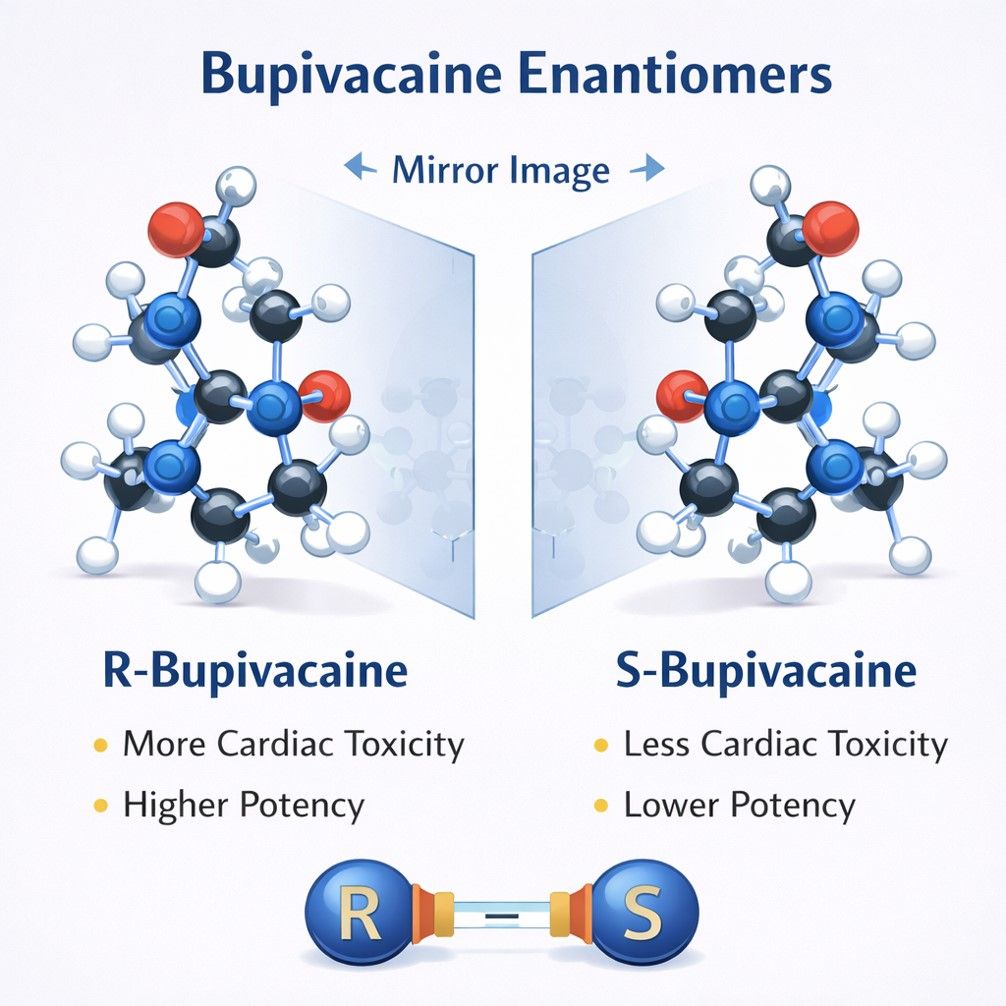
The session presents a practical comparison of ester and amide local anesthetics. Learners examine differences in metabolism, allergy potential, duration of action, and toxicity risk, using representative agents such as lidocaine, bupivacaine, and chloroprocaine. This section builds an essential framework for safe drug selection.
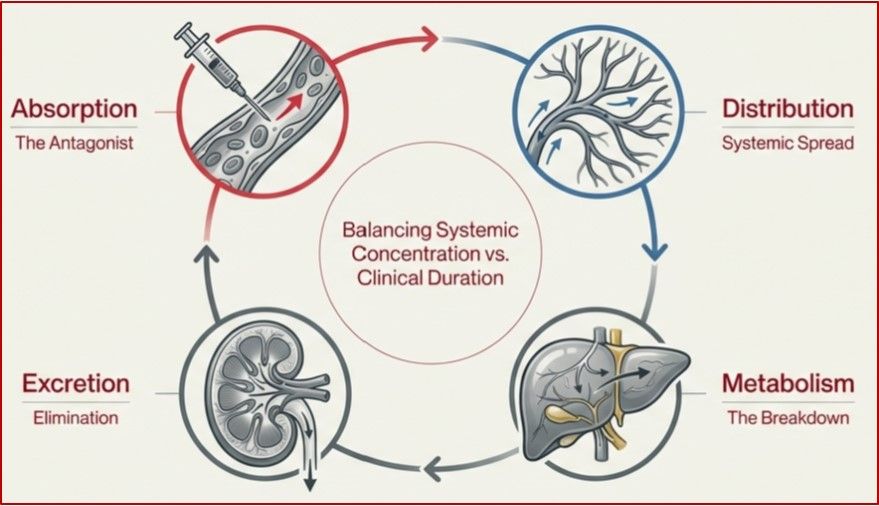
Pharmacokinetics: The Drug Lifecycle
A dedicated section explains the lifecycle of local anesthetics within the body, including absorption, distribution, metabolism, and excretion. The lecture highlights how injection site vascularity, protein binding, liver function, renal elimination, and patient-specific factors can influence drug effect and systemic toxicity.
Expanding Clinical Perspective
The lecture concludes by linking foundational pharmacology to broader clinical reasoning. By learning concepts traditionally emphasized in other medical specialties, participants can expand their professional knowledge base, strengthen interdisciplinary understanding, and prepare for more advanced topics in Parts 2 and 3 of the series.
As modern clinical practice becomes increasingly evidence-based and interdisciplinary, clinicians benefit from understanding core pharmacologic concepts that extend beyond their primary field of training. Local anesthetics are widely used across many medical specialties, and knowledge of their mechanisms, classification, metabolism, and safety principles can strengthen broader clinical reasoning and patient care.
This lecture responds to that need by bridging foundational pharmacology with practical clinical relevance. By focusing on essential principles such as drug classification, chemical structure, pharmacokinetics, and toxicity awareness, the session helps learners build a stronger scientific framework for safe and effective clinical decision-making.
Join this CME session to deepen your understanding of the basic science behind local anesthetics, explore how these agents behave in the body, and develop clearer insight into their safe clinical use.
Whether you are a resident clinician building essential medical knowledge or an experienced practitioner seeking to broaden your clinical perspective, this lecture provides clear, clinically relevant guidance that supports more informed and comprehensive patient care.