
Jan 11 • Jin Yong Choi
[Lecture Review] Ultrasound-Guided Pharmacopuncture Approaches to L4, L5, S1 Lumbar Nerve Root
The CME session Ultrasound-Guided Pharmacopuncture Approaches to L4, L5, S1 Lumbar Nerve Root provides a focused and clinically structured introduction to the practical use of real-time ultrasound in pharmacopuncture procedures. Rather than emphasizing theoretical anatomy alone, this lecture centers on hands-on fundamentals—normal lumbar sonoanatomy, operator and patient positioning, probe manipulation, and standardized procedural workflows—that directly support accuracy and procedural safety.
By translating ultrasound-guided techniques into clear, step-by-step clinical actions, the session equips practitioners with the skills and confidence needed to perform targeted pharmacopuncture for the L4, L5, and S1 nerve roots. Emphasis is placed on precise needle guidance, continuous needle tip confirmation, and safety-oriented decision-making, enabling participants to apply ultrasound-guided pharmacopuncture effectively and responsibly in everyday clinical practice.
Lecture Overview – This lecture is structured around the following key learning objectives:
1. Enhance medical knowledge by understanding the basic sonoanatomy of lumbar spine and nerve roots.
1. Enhance medical knowledge by understanding the basic sonoanatomy of lumbar spine and nerve roots.
2. Improve clinical competency by adapting new practical skills in pharmacopuncture techniques.
3. Enhance patient outcomes by adapting more precise and safe pharmacopuncture injection techniques to L-SPINE HIVD patients.
Learning Ultrasound-Guided Pharmacopuncture for Lumbar Nerve Roots
This lecture goes beyond theoretical discussions to demonstrate how ultrasound-guided pharmacopuncture should be applied in real clinical settings. Beginning with a review of normal lumbar sonoanatomy, learners are guided step by step through probe positioning, image optimization, and needle guidance techniques required for safe and accurate interventions.
Rather than focusing on rare or overly complex scenarios, the session emphasizes practical decision-making at the bedside—how to recognize reliable anatomical landmarks, how to adjust the probe when visualization is limited, and how to translate ultrasound findings into precise procedural actions.
Key highlights include:
Lumbar Sonoanatomy & Normal Scanning
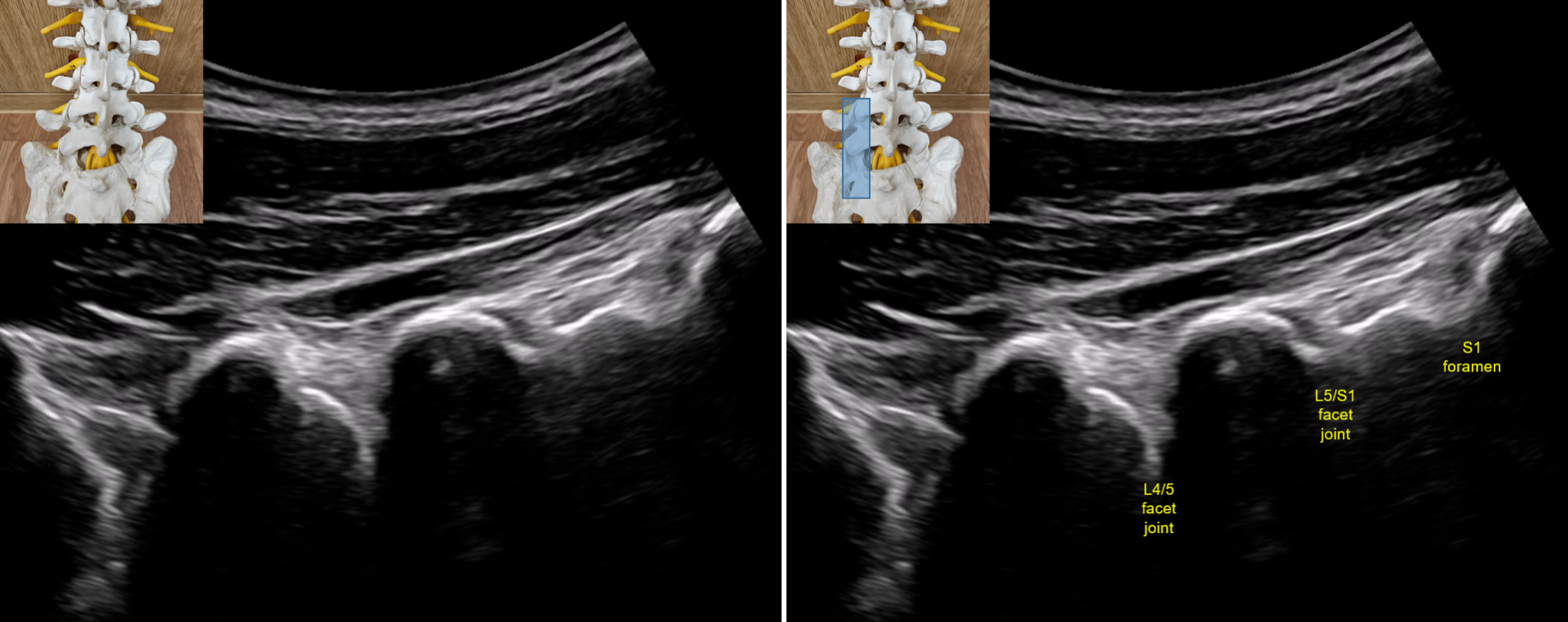
The lecture begins with a structured review of normal lumbar ultrasound anatomy, including the spinous processes, laminae, facet joints, transverse processes, interlaminar spaces, and foraminal regions. Emphasis is placed on recognizing these structures in routine longitudinal and transverse scans, as accurate identification of normal anatomy forms the foundation for all ultrasound-guided interventions.
Participants learn how common obstacles—such as bony shadowing from the iliac crest—can limit visualization, and how subtle probe movements can restore a clear and interpretable image.
Operator and Patient Positioning
Proper operator posture and patient positioning are addressed as essential components of procedural success. The session highlights standing on the same side as the target nerve, maintaining a stable line of sight to the ultrasound monitor, and positioning the patient—typically in the prone position with appropriate support—to optimize lumbar curvature and acoustic windows.
These ergonomic considerations are presented not as minor details, but as key factors that directly influence needle control, image stability, and overall procedural safety.
Ultrasound-Guided Targeting of L4, L5, and S1 Nerve Roots
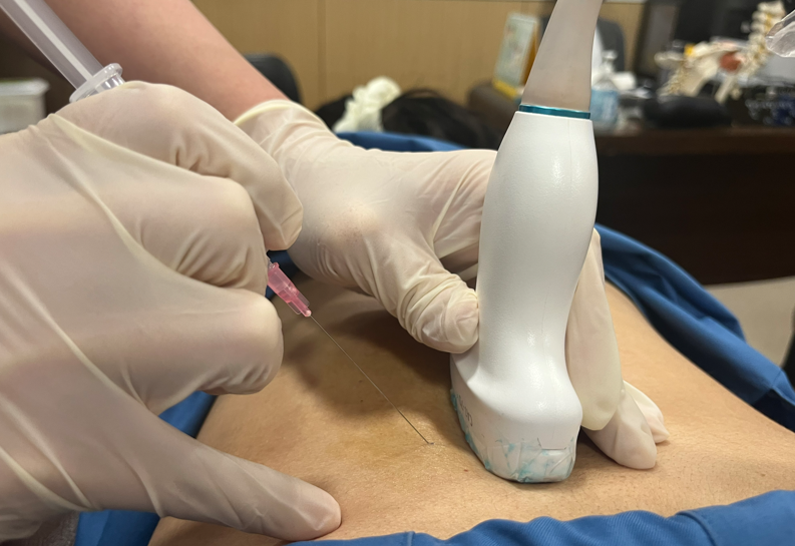
Building on these fundamentals, the lecture introduces target-specific approaches for pharmacopuncture of the L4, L5, and S1 nerve roots. Learners are guided through the process of transitioning from longitudinal to transverse views, identifying facet-level landmarks, and adjusting probe position to secure an optimal field of view.
Special attention is given to differences between in-plane and out-of-plane techniques, including how needle visualization changes and how to compensate when the needle tip is seen only intermittently. By linking anatomical landmarks to symptom-oriented targets, the session reinforces a clinically meaningful approach to ultrasound-guided pharmacopuncture.
Safety-Oriented Needle Guidance
Throughout the lecture, safety is emphasized as a continuous process rather than a single step. Participants learn the importance of ongoing needle tip confirmation, whether through direct visualization, subtle needle movements, or controlled injection of small volumes to verify position.
The session also highlights the need to remain alert for severe patient pain or strong resistance during needle advancement or injection, recognizing these signs as cues to pause, reassess, and reposition when necessary.
Infection Control and Procedural Discipline
Finally, the lecture reinforces strict skin disinfection before and after the procedure as a fundamental aspect of safe clinical practice. Pre-procedural antiseptic preparation and appropriate post-procedural care are presented as integral parts of the overall workflow, ensuring both patient safety and professional accountability.
Infection Control and Procedural Discipline
Finally, the lecture reinforces strict skin disinfection before and after the procedure as a fundamental aspect of safe clinical practice. Pre-procedural antiseptic preparation and appropriate post-procedural care are presented as integral parts of the overall workflow, ensuring both patient safety and professional accountability.
Why This Lecture Matters
For clinicians who perform pharmacopuncture in daily practice, accurate targeting and procedural safety are not optional skills—they are core clinical responsibilities. This lecture addresses the growing need for reliable, image-guided techniques by bridging the gap between anatomical knowledge and real-time procedural execution using ultrasound.
By focusing on practical decision-making at the bedside—how to identify normal lumbar sonoanatomy, optimize probe positioning, and confirm needle placement—the session supports safer, more consistent pharmacopuncture practice. Emphasis on continuous needle tip visualization, patient feedback, and strict infection control further reinforces a safety-oriented approach applicable across diverse clinical settings.
Ready to Strengthen Your Ultrasound-Guided Pharmacopuncture Skills?
Join this CME session to deepen your understanding of lumbar ultrasound anatomy, refine your ultrasound-guided needle techniques, and enhance your confidence in targeting the L4, L5, and S1 nerve roots.
Whether you are a resident clinician or a practitioner seeking to standardize and advance your interventional skills, this lecture offers immediately applicable, evidence-informed guidance that can meaningfully improve precision, safety, and clinical outcomes in everyday practice.
What to read next on Jaseng Medical Academy
Get in touch
-
536, Gangnam-daero, Gangnam-gu, Seoul, Korea
-
jaseng.education@jaseng.co.kr
-
+82 2 2222 2792
-
Contact Us
Family Sites
Our Newsletter
Receive Jaseng Medical Academy's updates and events
Thank you!

Copyright © 2019 - 2026 Jaseng Medical Academy. All rights reserved.