Overview of the Half-Day Clinical Training Program
See Program Highlights in Photos
A brief visual walkthrough of the half-day clinical sessions, demonstrations, and hospital tour.
-
Moment 1 · Welcome & Introduction
Welcome session and an introduction to Jaseng’s approach to musculoskeletal care
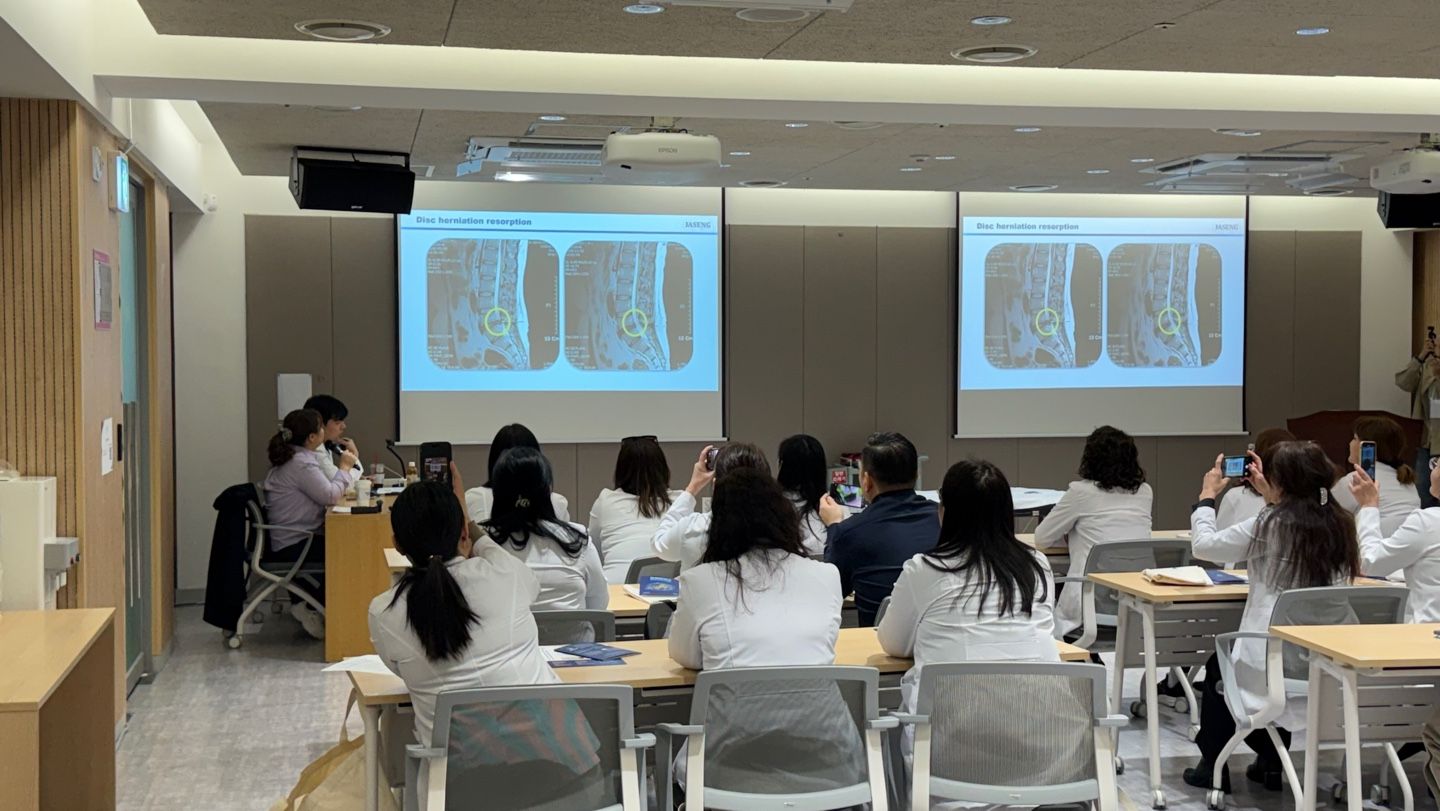
Orientation and an overview of Jaseng’s clinical philosophy and care model for MSK conditions. -
Moment 2 · Clinical Focus
A closer look at Jaseng’s non-surgical care for lumbar spine conditions
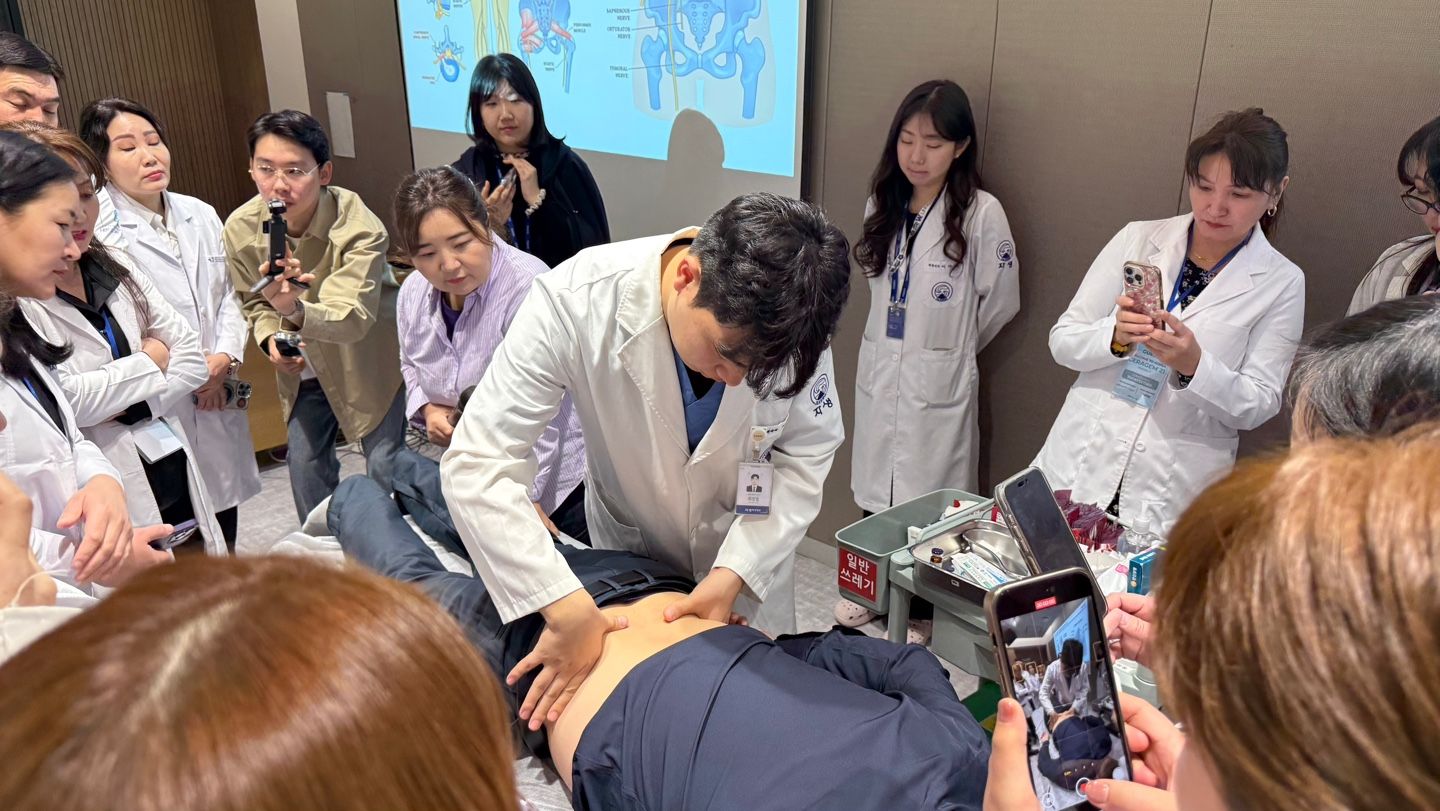
A focused session covering clinical reasoning and treatment workflows for lumbar-related conditions. -
Moment 3 · Demonstration 1
Live demonstration in a real clinical setting
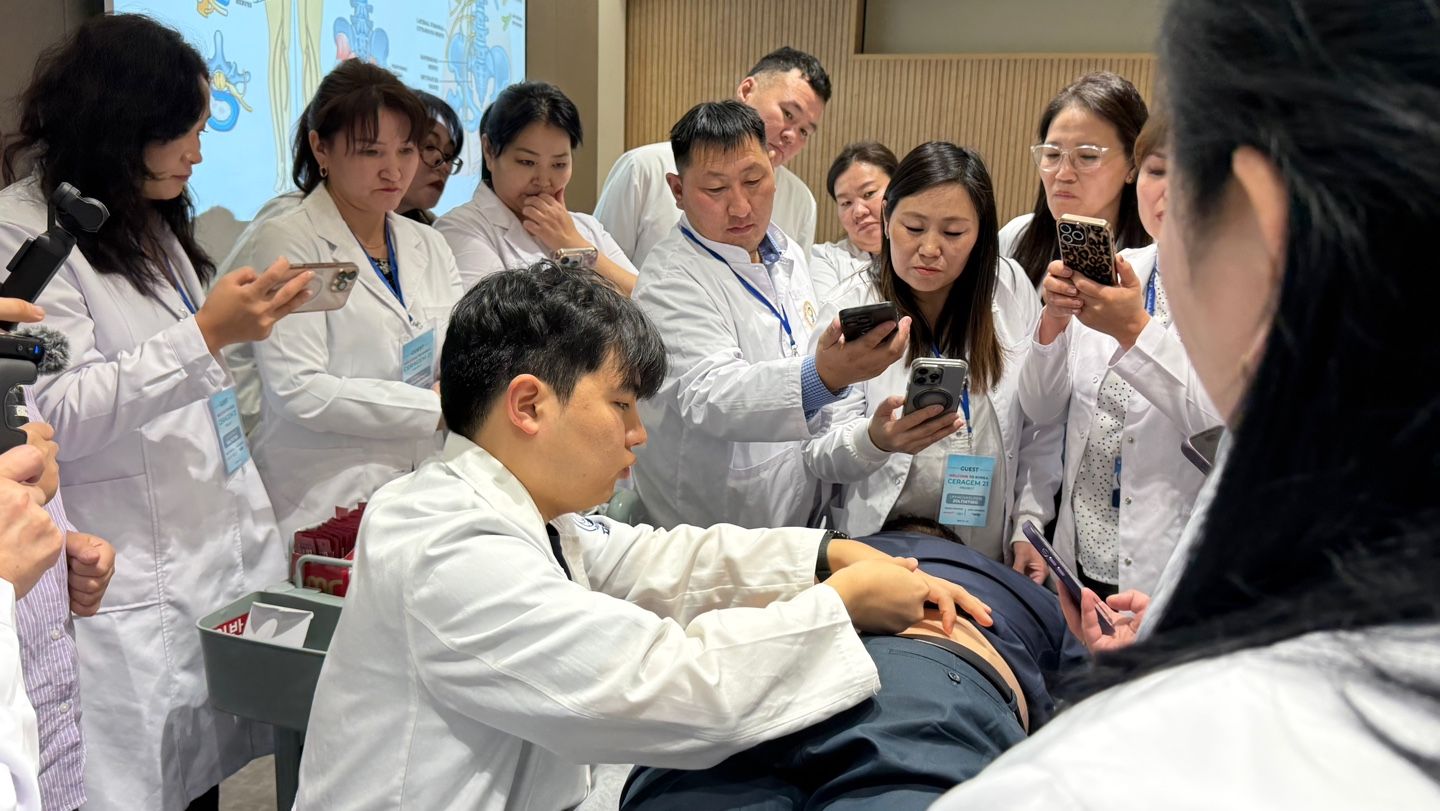
Demonstration of Jaseng’s non-surgical MSK treatment methodology with a lumbar focus. -
Moment 4 · Demonstration 2
An introduction to pharmacopuncture and Shinbaro medicine
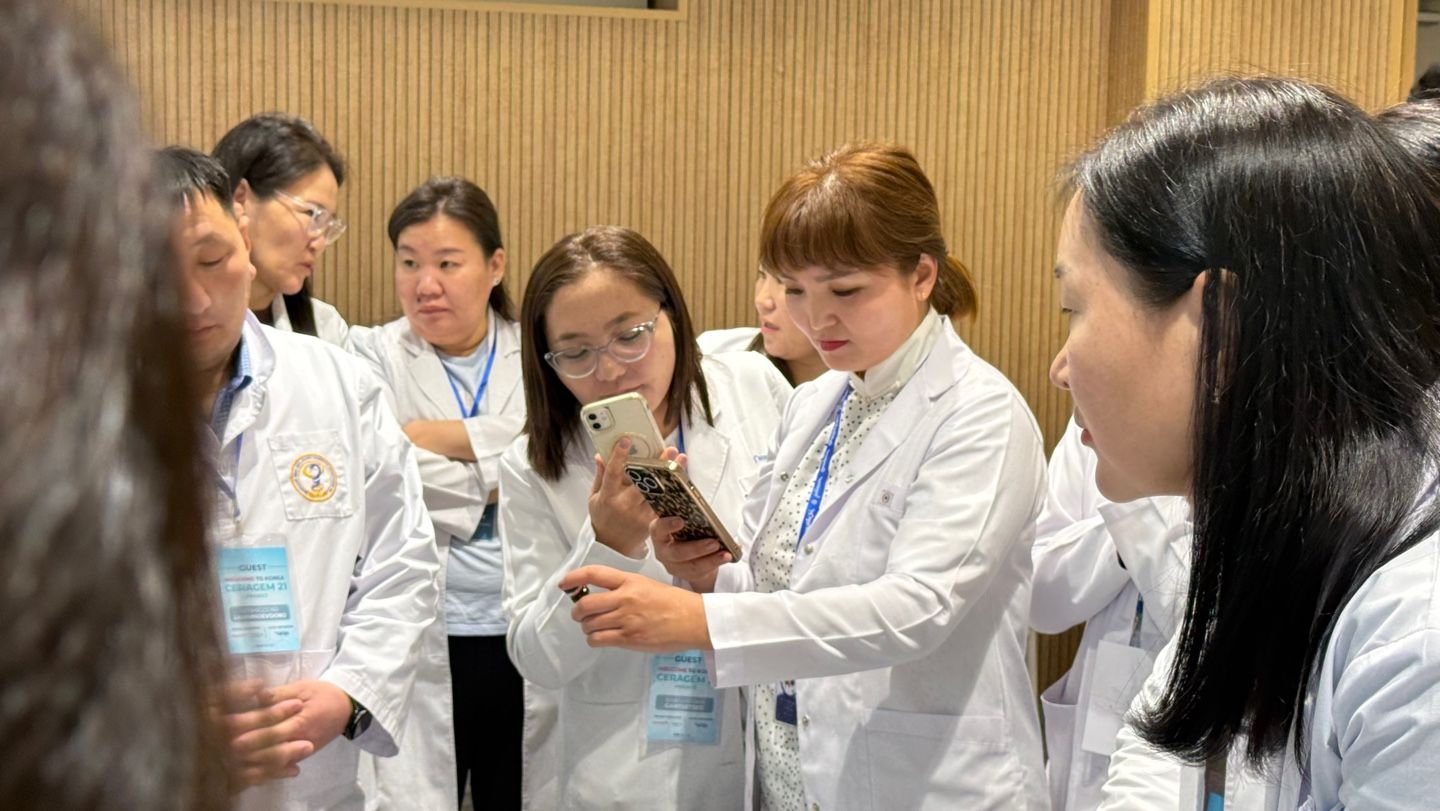
Participants learned core concepts and clinical applications of Shinbaro medicine and pharmacopuncture. -
Moment 5 · Certificate Presentation
Certificates awarded upon completion of the demonstration sessions
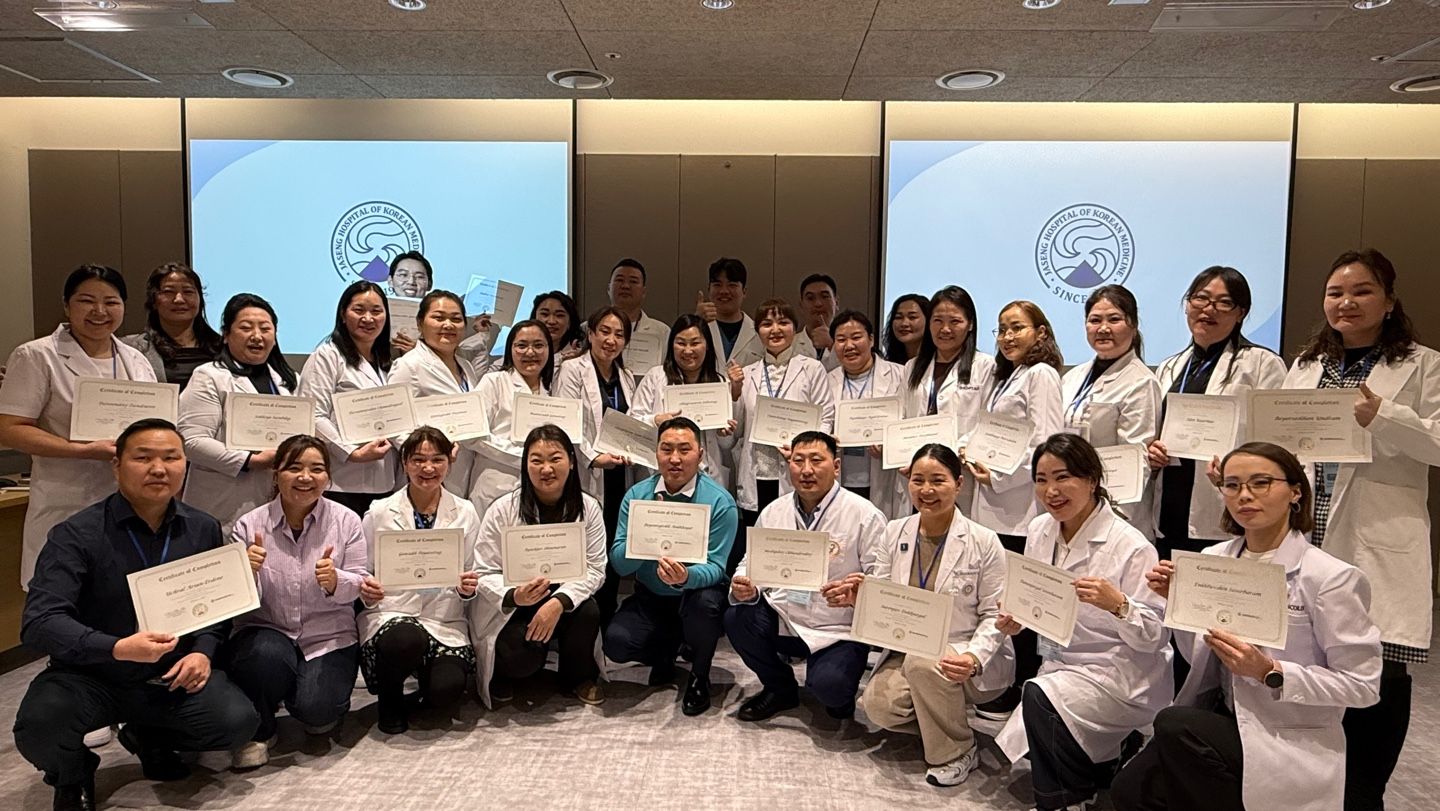
Certificates of attendance were presented to participants following the half-day clinical exchange. -
Moment 6 · Hospital Tour
Guided hospital tour (1)
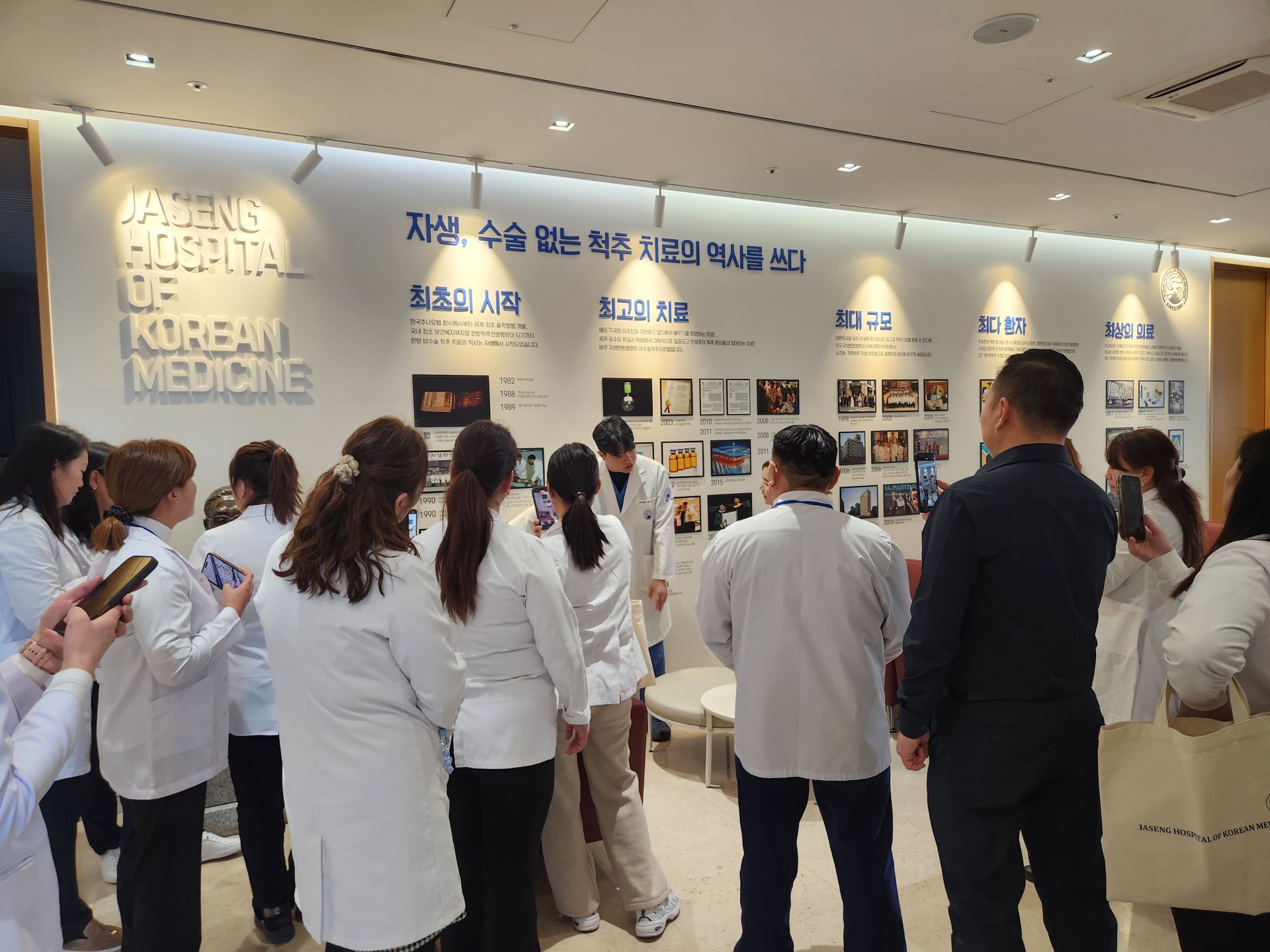
A guided tour of Jaseng Hospital of Korean Medicine, including key clinical and treatment areas. -
Moment 6-1 · Hospital Tour
Guided hospital tour (2)
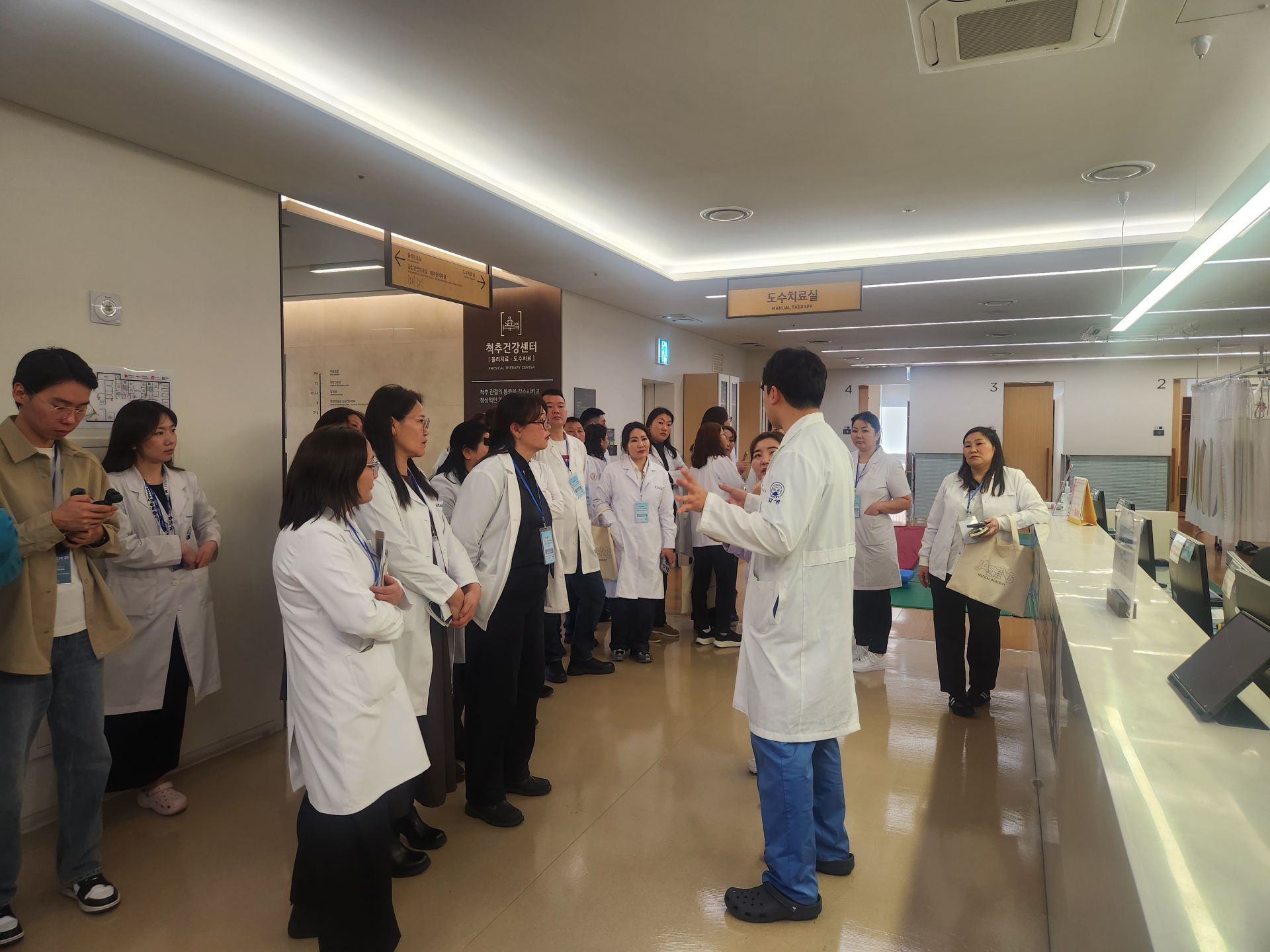
Participants explored additional departments and observed clinical workflows in practice.
Clinical Sessions and Demonstration
The program began with a short welcome and an overview of Jaseng Hospital of Korean Medicine and Jaseng Medical Academy, introducing participants to the institution's non-surgical approach to musculoskeletal (MSK) care. Special focus was placed on integrated treatment strategies for lumbar spine conditions, reflecting the participants' main area of interest
This was followed by a focused lecture and live clinical demonstration on the non-surgical management of lumbar MSK disorders, led by resident doctor Dr. Choi. The session introduced key treatment concepts and techniques used in daily practice, allowing participants to observe how these methods are applied in real clinical settings.
After the lecture and demonstration, certificates of attendance were presented, and the program continued with a guided hospital tour, offering participants a closer look Jaseng's clinical facilities and workflow.
This was followed by a focused lecture and live clinical demonstration on the non-surgical management of lumbar MSK disorders, led by resident doctor Dr. Choi. The session introduced key treatment concepts and techniques used in daily practice, allowing participants to observe how these methods are applied in real clinical settings.
After the lecture and demonstration, certificates of attendance were presented, and the program continued with a guided hospital tour, offering participants a closer look Jaseng's clinical facilities and workflow.
Hospital Tour and Professional Exchange
Following the clinical sessions, participants were guided on hospital tour to observe key facilities and treatment areas within Jaseng Hospital of Korean Medicine. The tour provided a closer look at the clinical environment, rehabilitation facilities, and patient-centered treatment spaces where integrative care is delivered on daily basis.
During the visit, participants were able to observe the overall treatment flow, from consultation to rehabilitation, and gain a better understanding of how different clinical teams collaborate within the hospital system. The tour also created opportunities for informal discussions with staff, allowing participants to exchange perspectives on clinical practices, healthcare system, and the role of Korean medicine in public hospitals.
Many participants showed particular interest in the structure of the rehabilitation departments and the integration of traditional and modern treatment approaches. The visit concluded with a brief exchange of impressions, with participants expressing appreciation for the opportunity to observe Jaseng's clinical setting firsthand.
During the visit, participants were able to observe the overall treatment flow, from consultation to rehabilitation, and gain a better understanding of how different clinical teams collaborate within the hospital system. The tour also created opportunities for informal discussions with staff, allowing participants to exchange perspectives on clinical practices, healthcare system, and the role of Korean medicine in public hospitals.
Many participants showed particular interest in the structure of the rehabilitation departments and the integration of traditional and modern treatment approaches. The visit concluded with a brief exchange of impressions, with participants expressing appreciation for the opportunity to observe Jaseng's clinical setting firsthand.
Closing Remarks
Although the program was brief, it provided a meaningful opportunity for Mongolian medical professionals to gain firsthand exposure to Jaseng's integrative approach to musculoskeletal care. The half-day session allowed participants to observe clinical techniques, exchange professional perspectives, and better understand the structure of specialized Korean medicine hospital.
Jaseng Medical Academy will continue to support practical, clinically oriented international education programs, fostering professional exchange and collaboration with healthcare institutions around the world.
Jaseng Medical Academy will continue to support practical, clinically oriented international education programs, fostering professional exchange and collaboration with healthcare institutions around the world.